BENEFITS OF WOOL
It’s natural
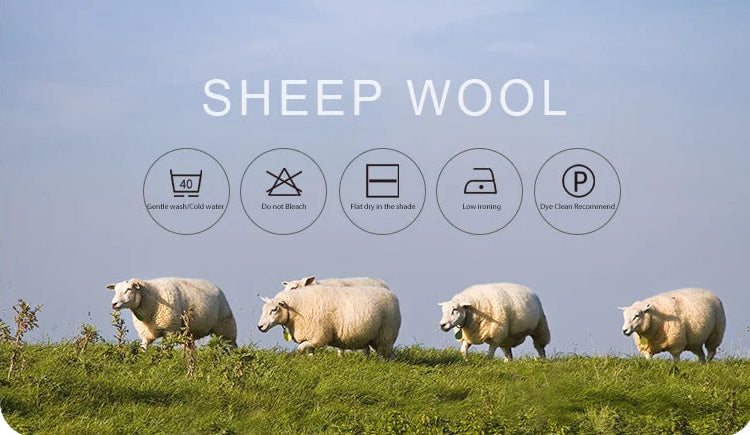
Wool is a natural protein fiber found on the backs of sheep. It is considered one of the most effective forms of all-weather protection, while man-made fibers with the same properties have yet to be produced.
It’s breathable
As wool fibers are packed together, tiny pockets of air form, allowing the material to absorb and release moisture. This could be moisture in the atmosphere or perspiration from the wearer. This makes wool an extremely breathable material.
As wool fibers are packed together, tiny pockets of air form, allowing the material to absorb and release moisture. This could be moisture in the atmosphere or perspiration from the wearer. This makes wool an extremely breathable material.
It’s odor-resistant
As wool can absorb the moisture from your skin, i.e., absorb sweat when you perspire, wool can even help to absorb any odor from sweating that is only released upon washing.
As wool can absorb the moisture from your skin, i.e., absorb sweat when you perspire, wool can even help to absorb any odor from sweating that is only released upon washing.
It reacts to your body
Wool is also able to react to any changes in your body temperature. It’s an active fiber that helps you to stay warm when it’s cold and cools you when it’s warm.
Wool is also able to react to any changes in your body temperature. It’s an active fiber that helps you to stay warm when it’s cold and cools you when it’s warm.
It’s static-resistant
As wool can absorb moisture from your body or the surrounding air, it rarely creates static electricity like synthetic fibers do, keeping you cozy and comfortable and avoiding any awkward clinging.
As wool can absorb moisture from your body or the surrounding air, it rarely creates static electricity like synthetic fibers do, keeping you cozy and comfortable and avoiding any awkward clinging.
It’s anti-wrinkle
Each wool fiber is structured much like a coiled string, allowing it to return to its natural shape after being bent, so woolen items tend not to crease or wrinkle.
Each wool fiber is structured much like a coiled string, allowing it to return to its natural shape after being bent, so woolen items tend not to crease or wrinkle.
It’s easy to clean
As its primary function is to protect the body of a sheep from the surrounding environment, wool fibers have a natural protective outer layer. This helps to prevent any marks or stains from being absorbed, so the dirt sits on the surface and is easily removed.
BENEFITS OF CASHMERE
Cashmere is a sought-after and expensive material, often used in high-end clothing and textile products. It has a combination of unique properties that have earned cashmere its reputation as a luxury material and justify its premium price.
Softness
Cashmere is known for its softness, producing a luxury feel. Cashmere is from the soft, fleecy underlayer of a cashmere goat. These fibers are of an extremely fine diameter (less than 19 microns, comparatively a human hair is 60 - 120 microns), which is why cashmere feels so soft. Also, cashmere is a high-loft fiber (air within the fiber), which translates into a plush, luxurious fabric with a silky feel. When properly cared for, cashmere gets softer with age.
Insulation
Cashmere is up to 8 times more insulating than regular sheep’s wool, providing superior insulation. This is due to the harsh climate the cashmere goats live in, with extreme cold weather conditions.
Lightweight
Cashmere is a lightweight fabric in comparison to the warmth it offers. Cashmere clothing is never bulky, which makes it easy to travel with – it won’t take up too much space in your suitcase.
Wrinkle-Resistant
Cashmere doesn’t wrinkle, making it an ideal fabric for travel clothing, when you won’t always have an iron on hand.
Elegance
Cashmere drapes beautifully and due to its lightweight nature and resistance to wrinkles, it’s a fabric that always looks elegant and flattering.
Comfort
Not only does cashmere keep you warm without adding bulk, it also has natural stretch, so you can move easily while wearing it.
Moisture Wicking
Cashmere has a high moisture content, and as the humidity changes in the air, so does its insulation, making it comfortable in all climates, even warm ones. The fibers have water-repellent exteriors, and the interior attracts water. This means that it attracts moisture, such as sweat, away from the body.
No Scratchiness
A lot of people avoid wool due to the scratchy feeling against the skin. Cashmere is soft and feels great against the skin as the fibers are much finer than wool and are spun tightly to produce a smooth, soft texture.
Breathable
Unlike synthetic fibers, which can leave you hot and sweaty, cashmere allows your body to breathe, which helps regulate temperature.
Luxury
Cashmere is considered a luxury material and the best of all-natural fibers. This is not only because of how amazing it feels against the skin, but also because of the price.
Fire Resistant
Cashmere has natural fire-resistant properties, and when it is exposed to fire, while it will smolder, it will not melt onto the skin, and it can self–extinguish once the source of the flame has gone out.
Hypoallergenic
Cashmere has hypoallergenic properties, making it a desirable choice for baby clothes and blankets, as well as those with allergies.
Smart Investment
When cashmere is cared for correctly, it can last a lifetime. It is a timeless fabric, and classic styles will always be on-trend.